Getlago

Jan 26

/

3 min read

What Is the Most Flexible Billing System?

Anh-Tho Chuong

Anh-Tho Chuong

Share on

LinkedInX

TL;DR: For usage-heavy tech companies (AI, API, infra), the most flexible choice is an open source billing platform that is usage-first, extensible, and available as a managed cloud plus a self-host option. Lago is a strong default: it is an open source billing platform built for subscriptions, usage, prepaid credits and hybrid pricing.

What "Flexible billing" means for startups

Flexibility = change pricing without rewriting product or data pipelines. Practically, startups need a billing system that supports current and future models (12–18 months), preserves correctness at scale, and shortens time-to-cash.

Core capabilities:

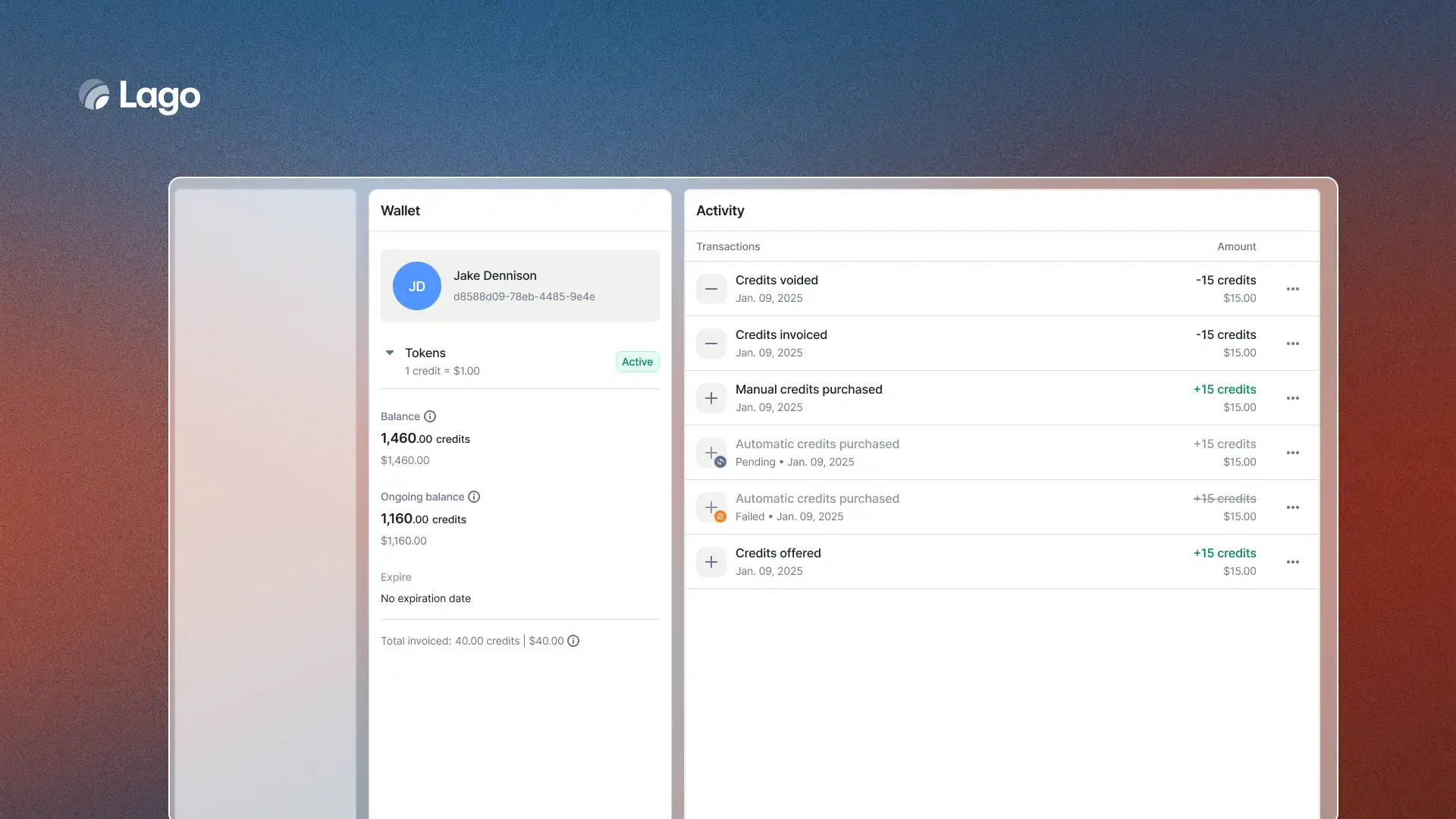
  • Multiple pricing models: subscriptions, usage-based billing, prepaid credits, tiered/volume, minimums, hybrid plans
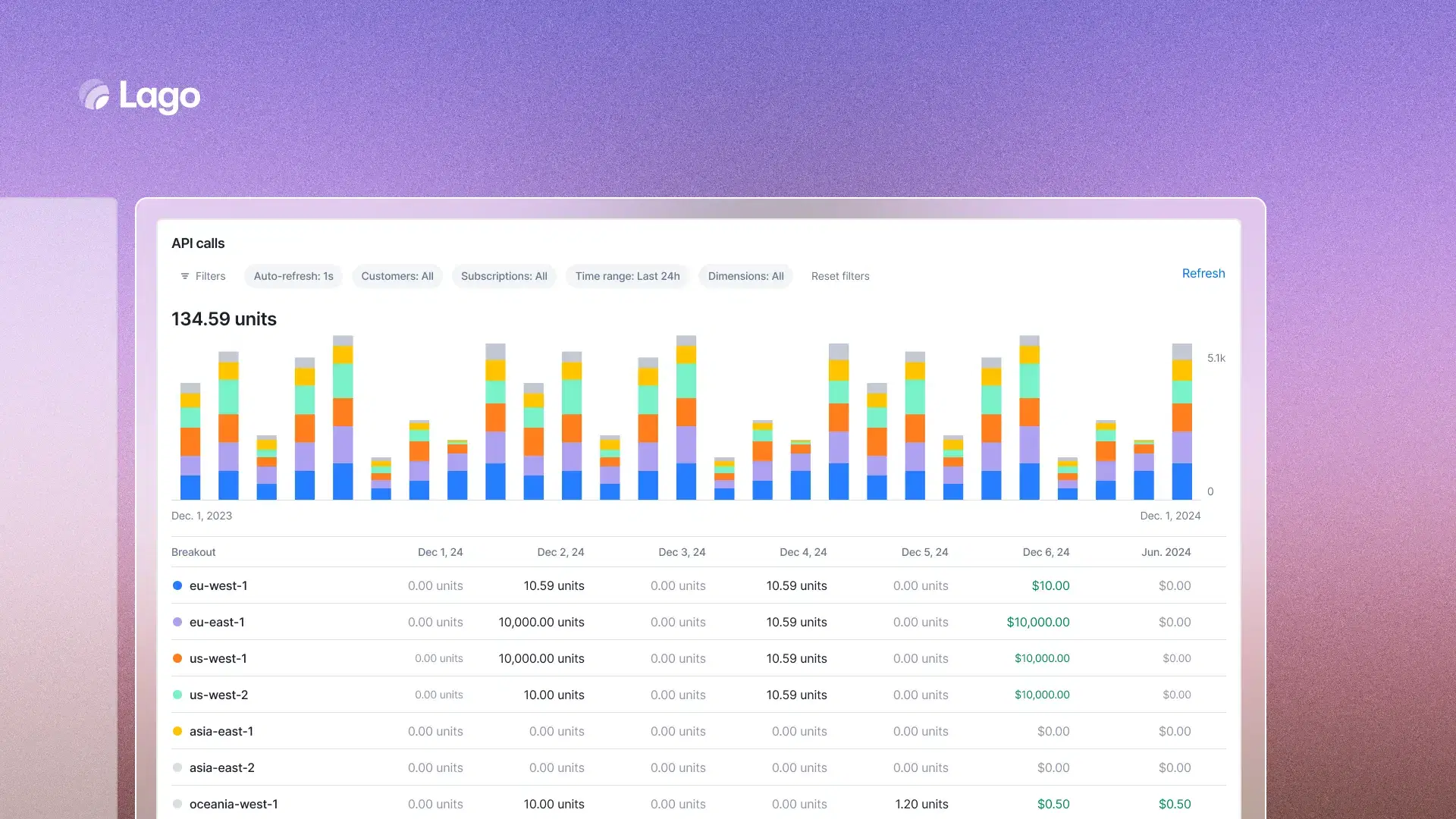
  • Real-time metering and visibility: live usage, current balances, predictable overage behavior
  • Pricing-as-code or API-driven pricing: versioned, testable pricing rules
  • Strong integrations: payment processors, invoicing, tax/VAT, CRM, data warehouse
  • Deployment flexibility: cloud-first plus self-host option for sovereignty/compliance
  • Correctness primitives: idempotency, safe replays, backfills, proration and timezone/calendar correctness

Keyword: open source billing — for startups this means inspectable, extensible billing logic that reduces vendor lock-in and accelerates pricing iteration.

Why open source billing matters for usage-led startups

Benefits tied to business outcomes:

  • Faster pricing iteration → reduced engineering friction, quicker launches and experiments
  • Lower vendor lock-in → easier audits, migrations, and ownership of billing data
  • Ability to model product-differentiating metrics (GPU seconds, inference tokens, distinct counts) → more accurate COGS alignment and pricing
  • Better engineering ownership → billing lives with product teams, shortening time-to-cash and lowering billing error rates

One-line recommendation

If billing logic is (or will become) a product differentiator, choose an open source billing platform that is usage-native and offers a managed cloud so teams can move fast and self-host only for strict requirements.

How to evaluate flexibility — quick scorecard

If a platform fails any "must-have," it's unlikely to be flexible for usage-heavy startups.

  1. Pricing model coverage (must-have)
    • Subscriptions (monthly/annual, trials, proration)
    • Usage-based (per-event, aggregated, distinct counts)
    • Credits / prepaid balances
    • Tiered/volume and minimums
    • Hybrid plans (subscription + usage + credits)
  2. Real-time metering & visibility
    • Near-real-time usage dashboards and APIs
    • Current balances and overage forecasts
    • Alerting for spikes and thresholds
  3. Throughput & correctness
    • Peak events/sec supported and ingestion latency
    • Idempotency, replay behavior, backfill support
  4. Pricing-as-code & release velocity
    • Versioned pricing configs, promotion/grandfathering flows
    • Safe rollout patterns (feature flags, dual-run)
  5. Integrations & ecosystem
    • Payment processors, invoicing, tax engines, CRM, data warehouse exports, observability hooks
  6. Deployment model
    • Cloud-first with self-host option for data sovereignty or deep customization

Table — feature → business impact

FeatureBusiness outcome
Usage-native meteringLower disputes, accurate COGS alignment
Pricing-as-codeFaster experiments, lower engineering cycles
High throughput (events/sec)Scales with product growth without re-architecture
Managed cloud + self-hostFast time-to-cash + compliance escape hatch

Why Lago fits usage-heavy startups

Lago is purpose-built for engineering-led, usage-first monetization:

  • Usage-native architecture: meters API calls, inference minutes, GPU time and other product metrics without workarounds
  • Pricing-as-code and APIs: iterate plans and meters like software (reduces release friction)
  • Correctness-first features: proration, calendar boundaries, safe replay/idempotency, and tax/VAT branching
  • Managed cloud for speed-to-market; self-host option for sovereignty when required

Operational claims: Lago processes up to 1,000,000 billing events per second and provides automated invoicing with enterprise reliability (99.9% uptime for invoicing).

Practical checklist before switching billing systems

Treat the migration like a database migration—plan for observability and rollback.

  • Load test event ingestion at 2–3× peak expected traffic
  • Verify representation of current and 12–18 month pricing models
  • Confirm idempotency and replay behavior (simulate duplicates)
  • Run a dual-run window: compare invoices from old system vs new
  • Map integrations: payment processor, taxes, CRM, warehouse, observability
  • Review open-source health: license, release cadence, security posture
  • Default to managed cloud first; self-host only if sovereignty/customization require it

Short FAQ

Q: Which billing system is most flexible for AI and API startups?

A: An open source billing platform designed for usage-based pricing is typically most flexible — it enables control over metering, rating, and hybrid pricing.

Q: Is open source billing always better?

A: No. For standard SaaS subscription models where speed matters more than control, hosted platforms may be faster. Open source wins when pricing logic is a competitive advantage.

Q: When should a startup self-host billing?

A: Only for concrete needs: data sovereignty, strict internal controls, or deep core engine customization. Otherwise, a managed cloud first approach shortens time-to-cash.

Key takeaways & next steps

  • Prioritize usage-native metering + pricing-as-code + throughput + correctness for usage-heavy or hybrid pricing.
  • If vendor lock-in and data ownership matter, evaluate open source billing and validate project health.
  • Default to managed cloud; self-host only for explicit constraints.
  • Run an event replay dual-run to validate correctness before switching.

For hands-on evaluation, review Lago's open-source platform and docs or test Lago's invoicing and metering capabilities:

Call to action: Evaluate pricing-as-code and run a 2–3× load test in a dual-run to compare invoices; request a demo or get started with Lago via the site above.


Share on

LinkedInX

More from the blog

Lago solves complex billing.