

 Frontier AI
Lago has been able to follow the pace of our releases and has allowed us to focus on what we do best.

Billing & Invoicing
Lago Cloud calculates charges, generates invoices and connects with your payment provider without your team running the billing service.
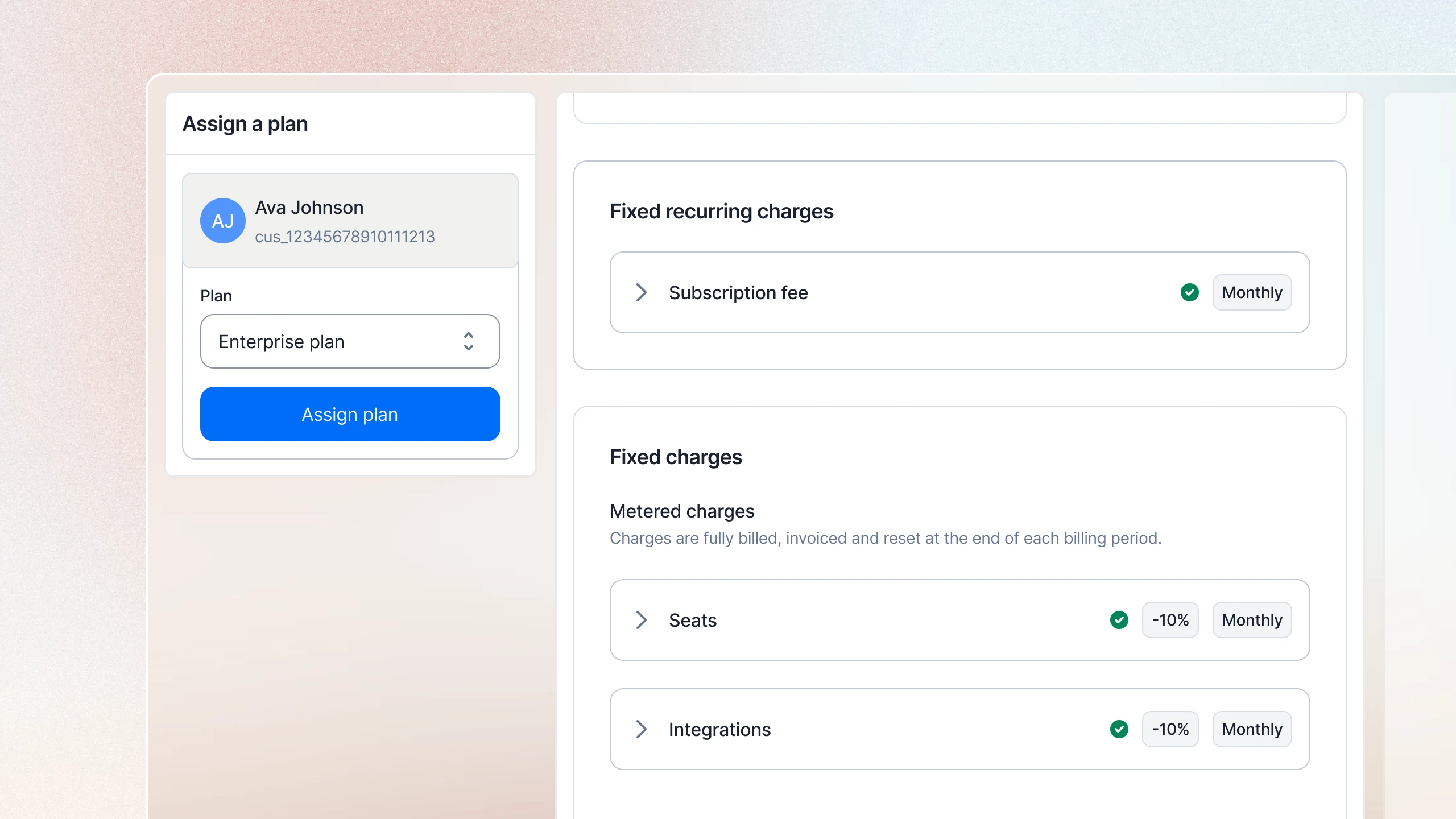
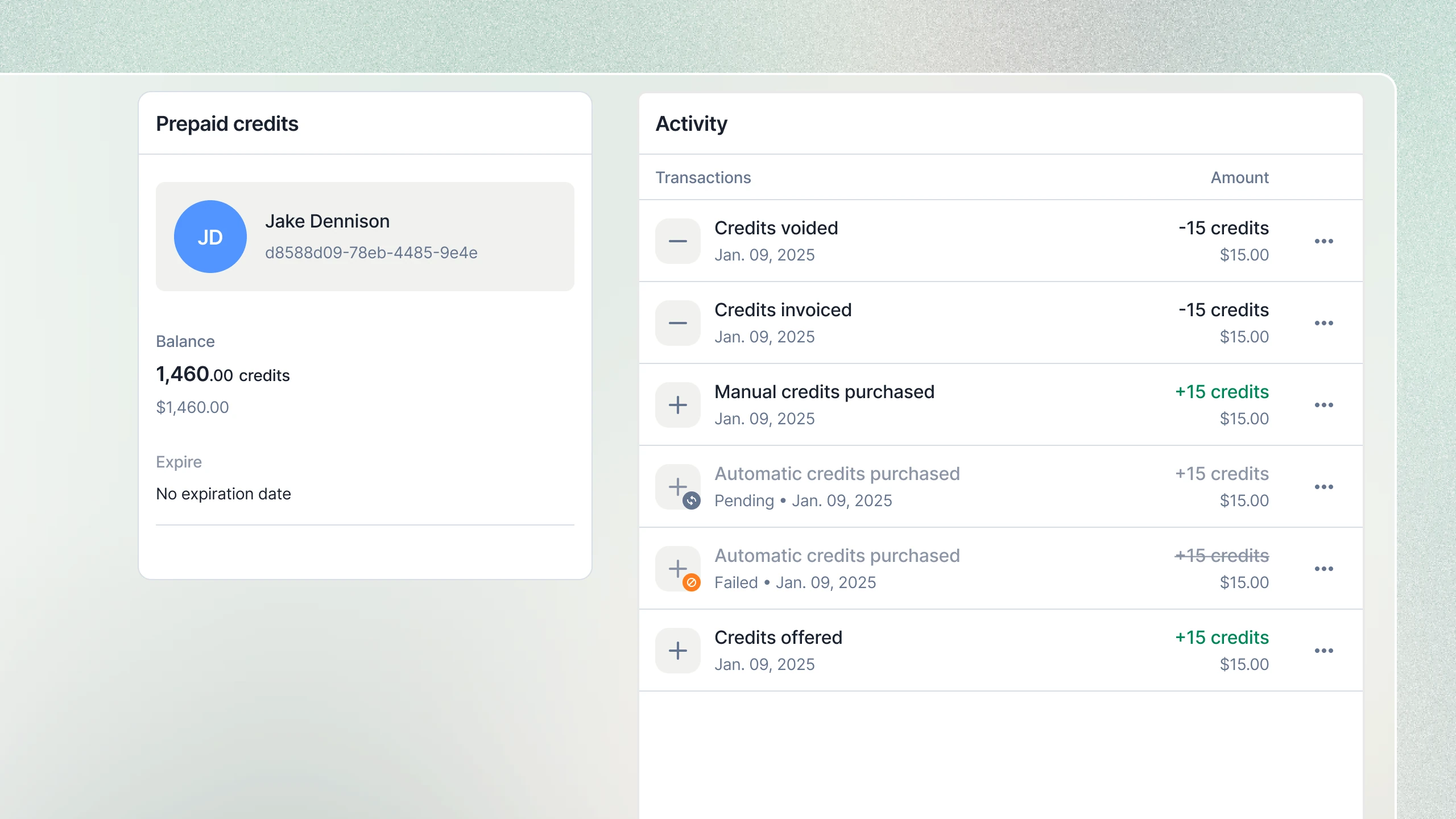
 Ava Johnson is assigned the Enterprise plan. Its subscription fee and its seats, credits, LLM input tokens, LLM output tokens and compute charges each get a 10% discount, billed monthly. Lago then issues an invoice from Quantive to VantagePoint: a $99.00 Pro plan subscription fee, 250 units of API usage overage at $0.12 and a $21.00 credits top-up, for a $150.00 subtotal. Sales tax of 8% applies to the $99.00 fee, the $51.00 of other items is exempt, and the total due is $157.92. Finally, Jake Dennison’s prepaid wallet takes four transactions in turn, each landing at the top of the activity: 15 credits invoiced, 30 credits invoiced, 100 credits purchased manually, then 45 credits invoiced. The balance moves from 1,520 to 1,530 credits.
Wrap your OpenAI, Anthropic or Bedrock client and every model call becomes a usage event in Lago.
Fund agents with prepaid wallets and get alerted as balances run low, before spend gets out of hand.
Let agents pay per request over HTTP 402, with each payment tied to the usage it covers.
Connect agents to Lago through the MCP server, the CLI or the API. Each one reads and writes the same billing data.

Create a Lago plan from plan.json using the CLI:
lago plans create --input @plan.json --output jsonExample Lago JSON response for a yearly Basic plan with usage-based API charges:
{
  "plan": {
    "name": "Basic",
    "code": "basic",
    "interval": "yearly",
    "amount_cents": 90000,
    "amount_currency": "USD",
    "charges": [
      {
        "billable_metric_code": "api_calls",
        "charge_model": "standard"
      }
    ]
  }
}Invoices go out with the right taxes and get paid through your provider.
Every payment syncs to your accounting and CRM.
 Assign plan
 Subscription fee
 -10%MonthlySeats-10%MonthlyCredits-10%MonthlyLLM Input Tokens-10%MonthlyLLM Output Tokens-10%MonthlyCompute-10%Monthly
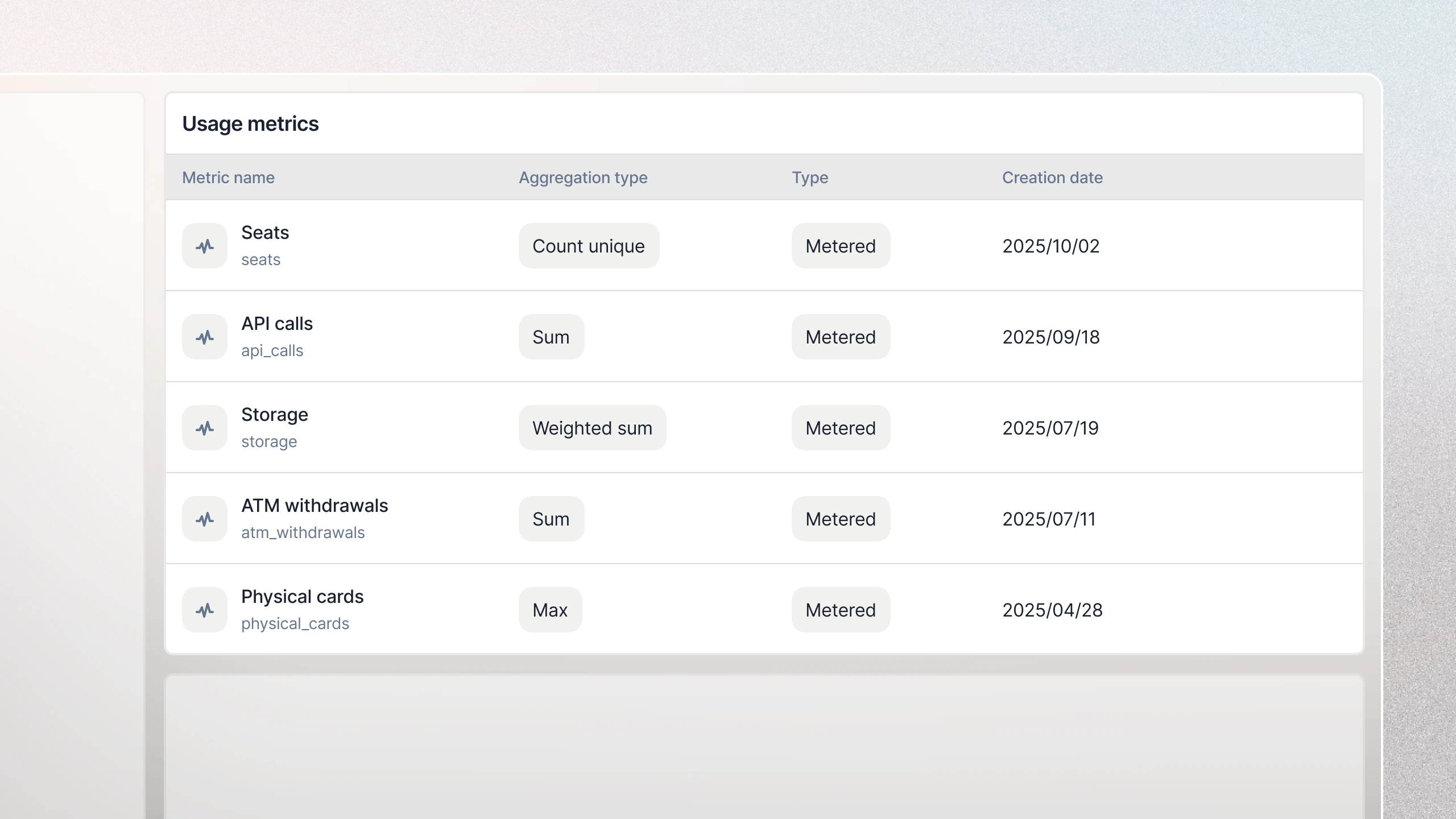
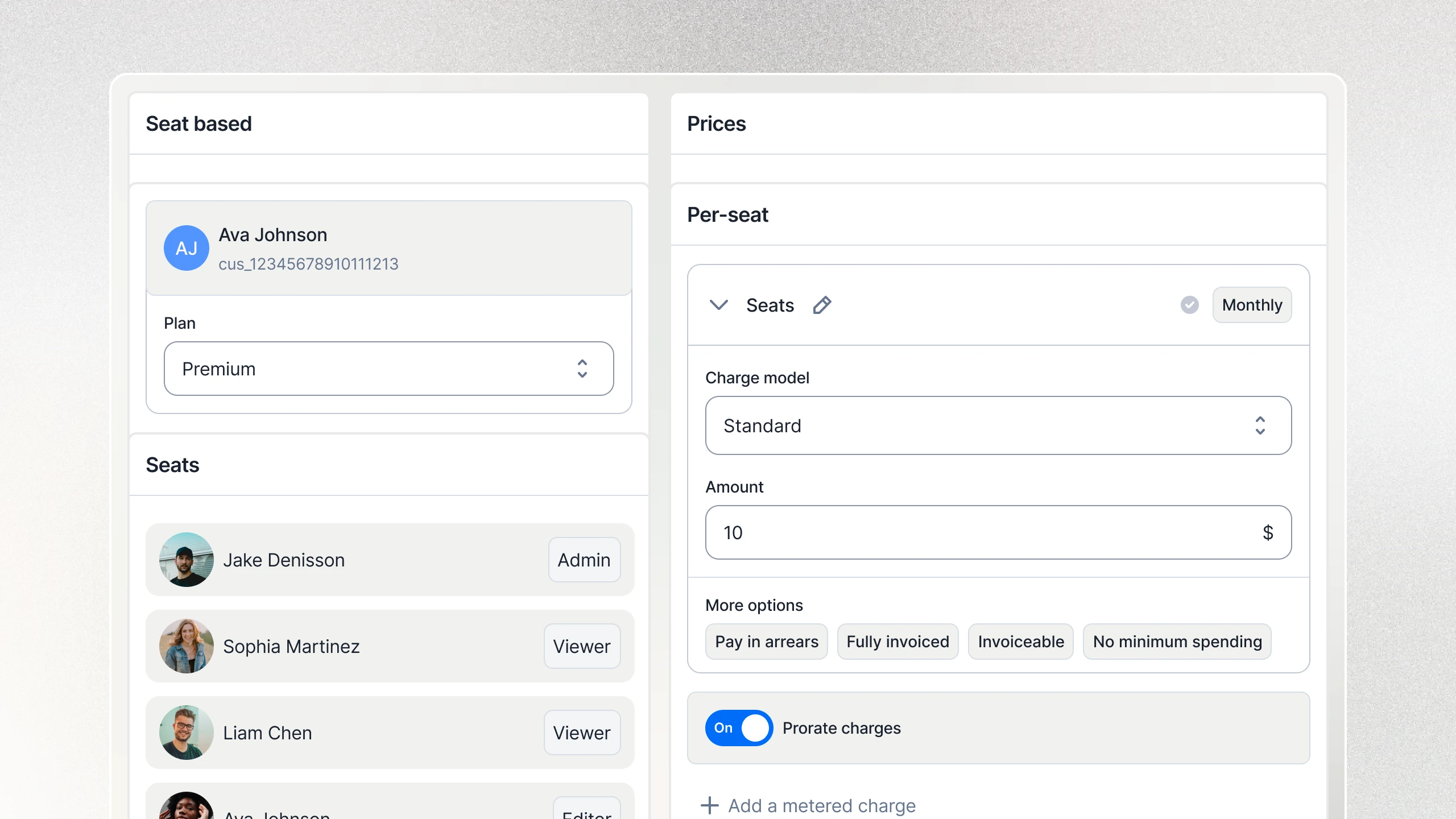
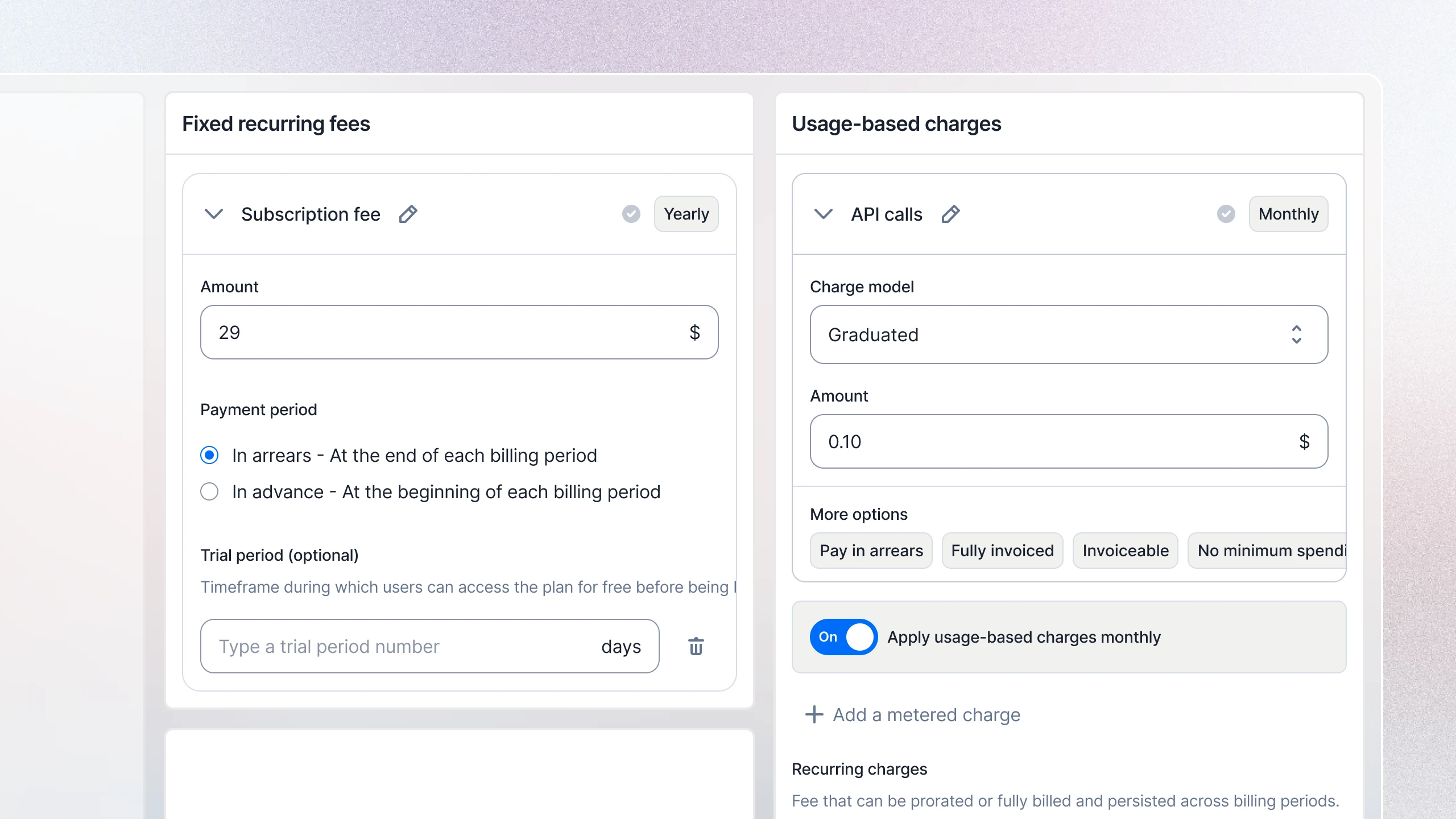
Pricing and packaging.Model subscriptions, usage, seats, credits or hybrid plans, and change prices and packages without rebuilding billing.
Billing is mission-critical. Lago is engineered for the realities of high-volume enterprises.


Billing is mission-critical. Lago is engineered for the realities of high-volume enterprises.
See how ambitious teams build and scale their billing with Lago.
Frontier AILago has been able to follow the pace of our releases and has allowed us to focus on what we do best.
What a billing system does, and where teams outgrow the one they have.

Jul 3, 2025
The main options for usage-based and hybrid billing, side by side.
May 8, 2025
Subscription, usage-based, hybrid and everything between.
Sep 30, 2025
What it takes to change pricing without an engineering project.
Jan 26, 2026
Where your billing data lives, and what that decides.
Feb 23, 2026
Tying usage, invoices and the ledger together at close.
Mar 22, 2026
Lago calculates charges from a customer's plan and billable metrics, then automatically creates and sends an invoice once the billing period closes. Invoices apply the right taxes, include usage and subscription line items together, and can go out as PDF or as XML for e-invoicing compliance, without manual assembly.
Yes. A single invoice can combine a flat subscription fee, usage-based charges, prorations, and credit or coupon deductions on the same line-item list. This is what lets a company bill a base plan and metered overage together instead of running separate billing processes for each.
Lago applies tax rates automatically at invoicing time and connects to dedicated tax engines like Avalara and Anrok for jurisdiction-specific calculation. A team can also set manual tax rates directly on a plan or customer when a full tax integration isn't needed yet.
A failed payment triggers a dunning campaign: Lago retries the charge on a defined delay and attempt count, and sends the customer an email with a payment link if a connected payment processor is in use. Reaching the overdue balance threshold on a campaign starts this process automatically, and a successful retry updates the invoice status without manual follow-up.
Yes, through voiding rather than editing. Voiding an invoice keeps it in the record for audit purposes, zeroes its value, and marks it as not payable, and a credit note can be issued alongside it to refund the customer or hold the balance as credit. The voided invoice can then be regenerated with corrected line items while staying linked to the original for traceability.
Yes. Credit notes can be issued on their own or as part of voiding an invoice, and the resulting balance can be refunded to the customer's original payment method or kept as a credit against future invoices. This covers the common corrections teams need: overcharges, cancellations, and partial refunds.
Lago has official native integrations for GoCardless, Stripe and Adyen, plus community integrations for Cashfree and Moneyhash. Other processors need a custom connection through Lago webhooks and API. Automatic collection, status updates and refunds depend on the integration; verify your chosen flow.
Yes. The same invoicing engine handles pure subscriptions, pure usage-based billing, and hybrid plans that mix the two, plus prepaid credits and usage allowances. A company doesn't need a separate tool depending on which pricing model a given plan uses.