

 Filters











 Search invoices



 Frontier AI
Lago has been able to follow the pace of our releases and has allowed us to focus on what we do best.

Revenue Analytics
Lago unites your billing data, keeps it safe and acts as your source of truth.
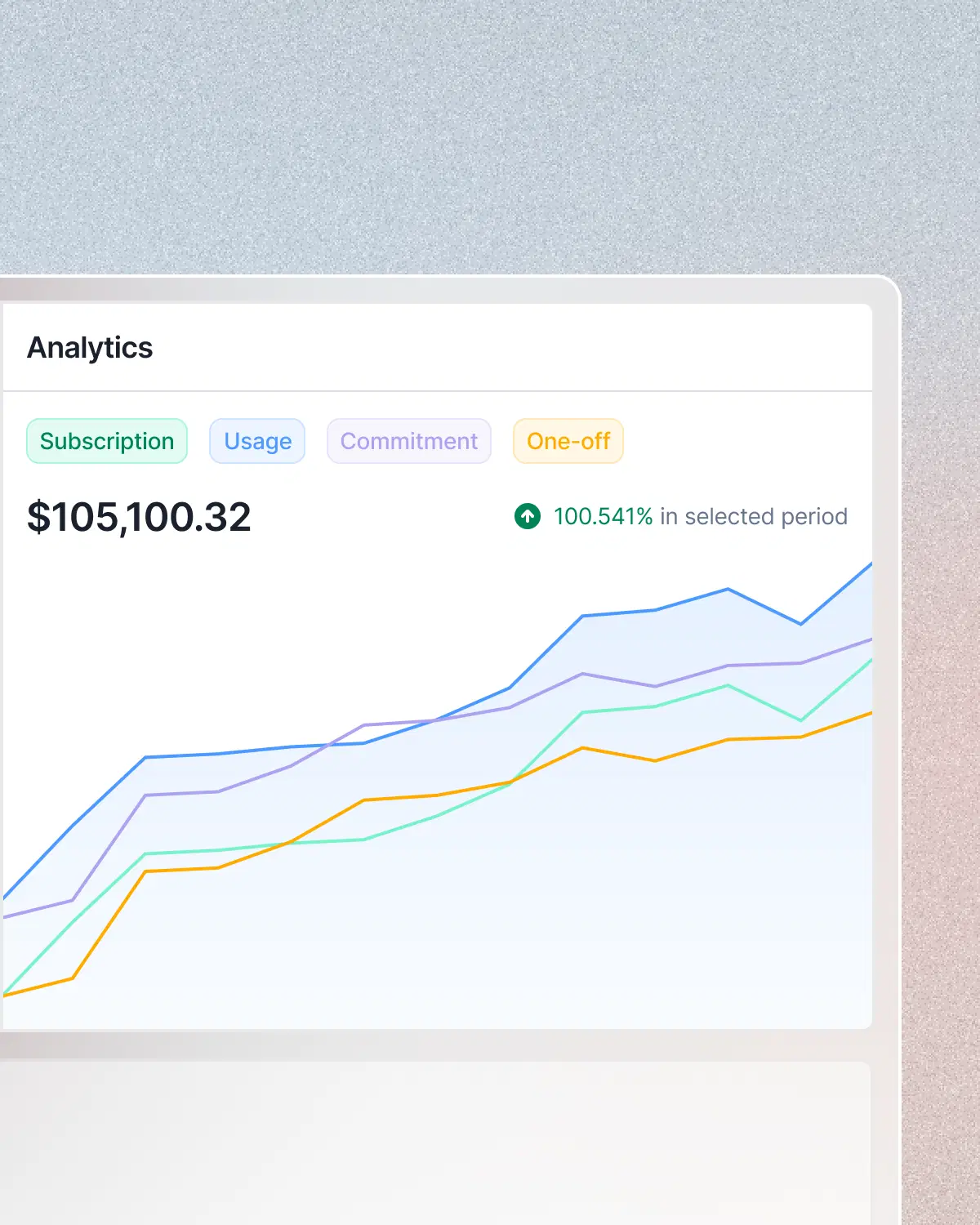
 The Lago Analytics app shows $1,425,000.00 of gross revenue from July to December 2025, split into subscription, usage, commitment and one-off invoices. The MRR tab then shows ending MRR growing from $138,000.00 in August to $166,000.00 in December, broken into new, expansion, contraction and churn. Finally, the Usage tab splits December's $108,000.00 of usage revenue across API calls, input tokens, output tokens and storage, and exports it to a CSV file.
Read it in built-in dashboards, ask the AI Finance Assistant, sync it to your warehouse, forecast next year's usage or stream every change to your systems. All from the billing data already in Lago.
Built-in Analytics
Revenue streams, MRR, usage, credits and invoices, ready in the app. Every amount stays in the currency you billed in, and each number breaks down by month, plan or customer.
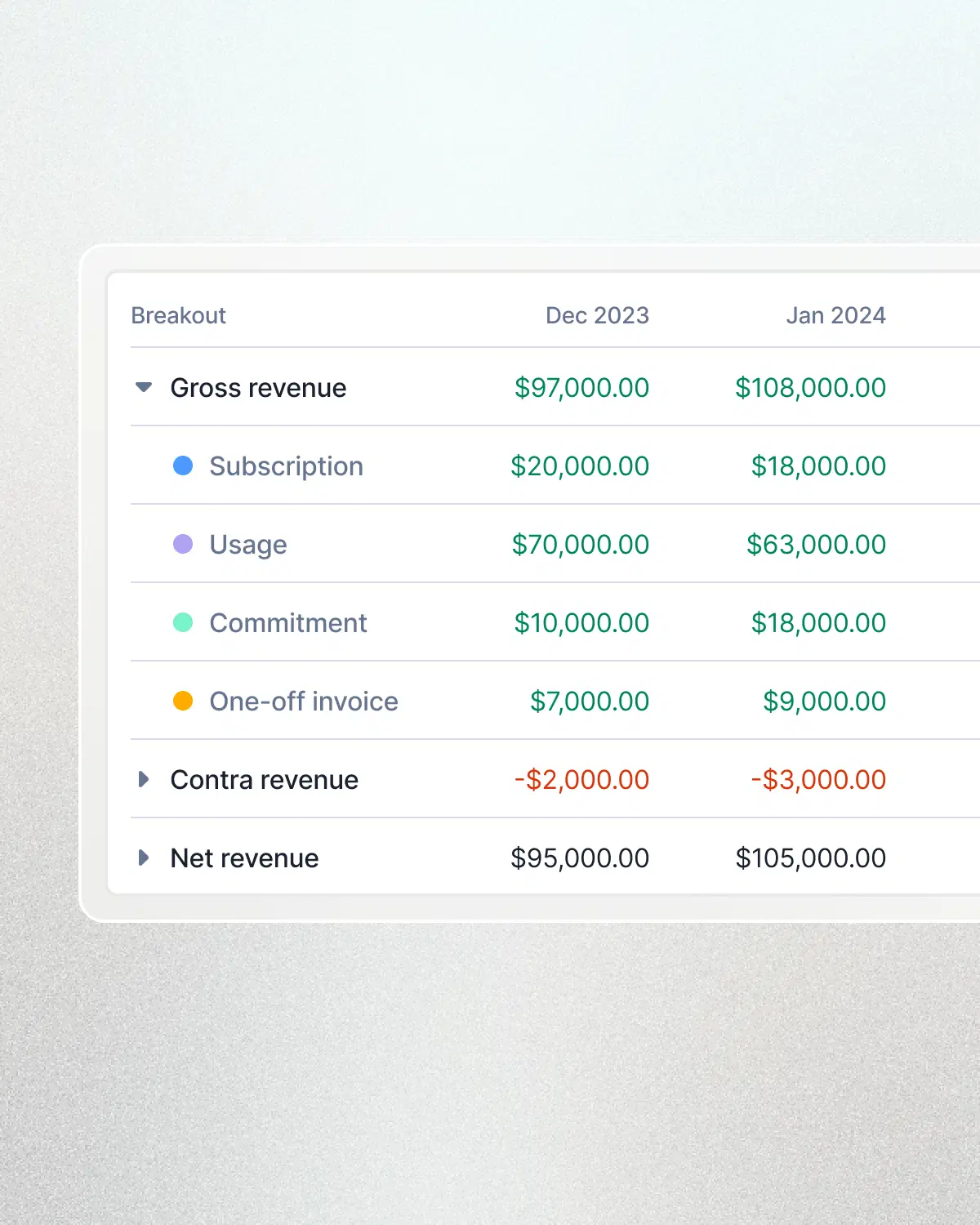
Lago Analytics: gross revenue from August to December 2025, split into subscription, usage, commitment and one-off invoices, then contra revenue and net revenue by month.

 31.75% in selected period





 Gross revenue$211,000.00$231,000.00$243,000.00$262,000.00$278,000.00
 Subscription$126,000.00$131,000.00$138,000.00$144,000.00$150,000.00
 Usage$71,000.00$80,000.00$88,000.00$97,000.00$108,000.00
 Commitment$12,000.00$14,000.00$14,000.00$16,000.00$16,000.00
 One off invoice$2,000.00$6,000.00$3,000.00$5,000.00$4,000.00Contra revenue-$4,200.00-$3,900.00-$5,100.00-$4,800.00-$5,600.00Net revenue$206,800.00$227,100.00$237,900.00$257,200.00$272,400.00
Connect Claude or any MCP client to your billing data. Ask about invoices, customers and usage in plain language, and get the numbers back.
The Finance Assistant turns a question into an aggregated report, read-only. The Billing Assistant takes over when something needs to change.
Coding agents pull the same numbers through the API and CLI to build custom reports. A Lago plugin for Claude Code and Codex is in preparation.
Connect Claude or your own agent to Lago through the open-source MCP server. Each question becomes a call to the Lago API, with the filters it needs.

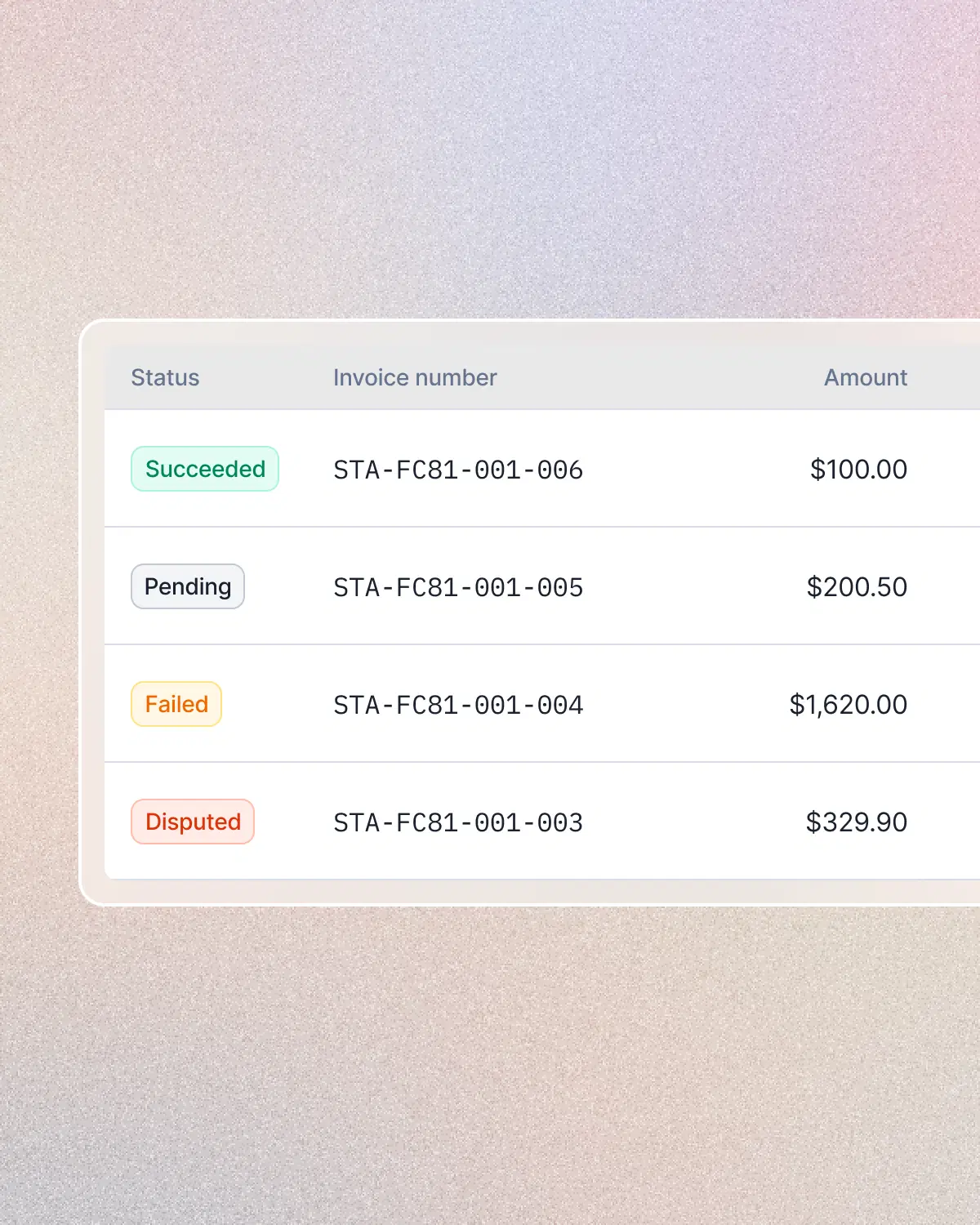
An agent asks: which invoices failed to collect in November?
Which invoices failed to collect in November?The agent calls the Lago MCP server's list_invoices tool with payment status failed, issued from November 1 to November 30, 2025, 100 per page.
{
  "method": "tools/call",
  "params": {
    "name": "list_invoices",
    "arguments": {
      "payment_status": "failed",
      "issuing_date_from": "2025-11-01",
      "issuing_date_to": "2025-11-30",
      "per_page": 100
    }
  }
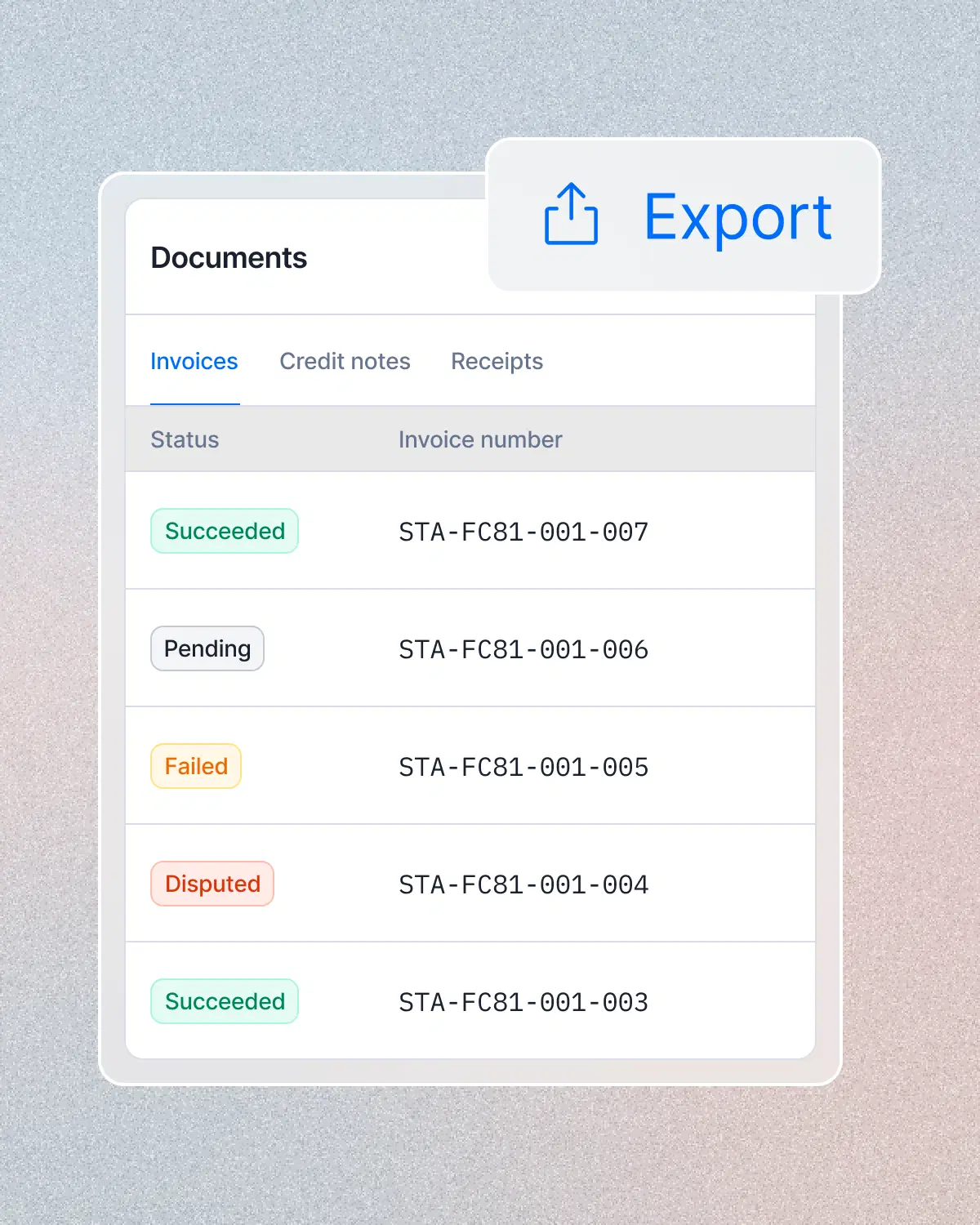
}Sync to your warehouse, download a CSV, or ask an agent.
The same billing data, the same filters.


Sync billing data back to your warehouse or cloud storage.Lago Data Pipeline syncs invoices, fees, subscriptions and wallets to your warehouse or cloud storage. Daily by default, every 15 minutes at the fastest.
Billing is mission-critical. Lago is engineered for the realities of high-volume enterprises.
Billing is mission-critical. Lago is engineered for the realities of high-volume enterprises.
See how ambitious teams build and scale their billing with Lago.
Frontier AILago has been able to follow the pace of our releases and has allowed us to focus on what we do best.
Revenue analytics is Lago's unified layer over billing, revenue, and product usage data, built on Apache Superset dashboards that finance and operations teams use without a separate BI tool. Metrics like MRR, revenue streams, and credit consumption can be filtered by customer, subscription, or product and exported as JSON, CSV, or Excel.
Yes. Dashboards are fully composable on top of Lago's billing data, with prebuilt financial reporting views as a starting point and the ability to filter, break down by dimension, and build per-customer views from there. The same data is available through the API for teams that want to pull it into their own BI stack instead.
Yes. Lago forecasts paid usage up to 12 months ahead using historical data grouped by billable metric, subscription, and charge, and returns three scenarios: conservative, realistic, and optimistic. It models subscription growth from historical patterns, though forecasts can't account for new products or billable metrics that don't have usage history yet.
Yes, as a premium add-on in private beta. Lago produces draft accrual-basis revenue reports from your billing data, allocating revenue across the service period in which it was earned rather than when the invoice was sent or paid. Recognized revenue, deferred revenue, a revenue waterfall, and balance sheet and income statement views are available, and every figure traces back to a journal entry. Reconcile the output against your own books before using it for statutory reporting.
Recognized revenue is the portion of an invoice that's been earned through service delivery in a given period; deferred revenue is the portion billed in advance for service not yet delivered, and sits as a liability until it's earned. Lago tracks both automatically from the same billing data, so finance teams don't have to build separate accrual logic on top of invoices.
Analytics datasets refresh daily, so same-day billing or usage changes may not appear in a dashboard until the next refresh. Teams that need faster visibility can pull analytics data directly through the API instead of waiting on the daily refresh.
Yes, through the Lago Data Pipeline. It syncs core billing tables (customers, invoices, subscriptions, fees, credit notes, and more) into warehouses like Snowflake, BigQuery, Redshift, and Databricks, plus transactional databases and cloud storage, on a schedule as frequent as every 15 minutes. This is what lets a finance team run its own SQL against billing data or build dashboards in a tool Lago doesn't natively support.
Yes. Because the analytics layer sits on the same billing data as invoicing, it covers self-serve, sales-led, subscription, usage-based, and hybrid revenue streams in one place rather than requiring separate reporting per pricing model.