Pricing & Monetization
Credit-Based Pricing: Prepaid Credits, Top-Ups and Real-Time Balances

Anh-Tho Chuong•Oct 10•13 min read
Oct 9
/2 min read
Anh-Tho Chuong
Share on


A billing system for EU customers has to do more than put a VAT rate on an invoice. It has to connect the contract, the customer’s location and tax status, product usage, the correct issuing entity, and the record finance keeps after a correction.
Use this checklist when deciding whether to build that workflow or use a billing platform. Test the countries and transaction types you actually sell into. Tax and invoicing obligations depend on the facts of each supply, so have your tax and legal advisers confirm the rules for your business.
Map a real sale: which legal entity supplies the service, where the customer is established, whether the buyer is a business or consumer, the currency, the tax treatment, and who collects payment. The European Commission says EU VAT invoicing has common baseline rules and, in some areas, national rules. Its VAT invoicing guide lists required invoice information and points to country-specific provisions. Do not assume one template or one tax setting covers every market.
Give a prospective system a set of transactions your finance team has already reviewed: a domestic B2B sale, a cross-border B2B sale, a consumer sale where relevant, a refund, and a credit note. Check the customer and tax identifiers, the tax decision, invoice numbering, wording, currency, and correction trail. The EU’s One Stop Shop guidance is relevant to eligible cross-border sales; it does not make every sale an OSS transaction.
Lago generates invoices and connects to tax providers such as Anrok and Avalara. Validate the provider, jurisdictions, data fields, and invoice output in your own stack. A tax integration is a calculation path, not a guarantee of compliance.
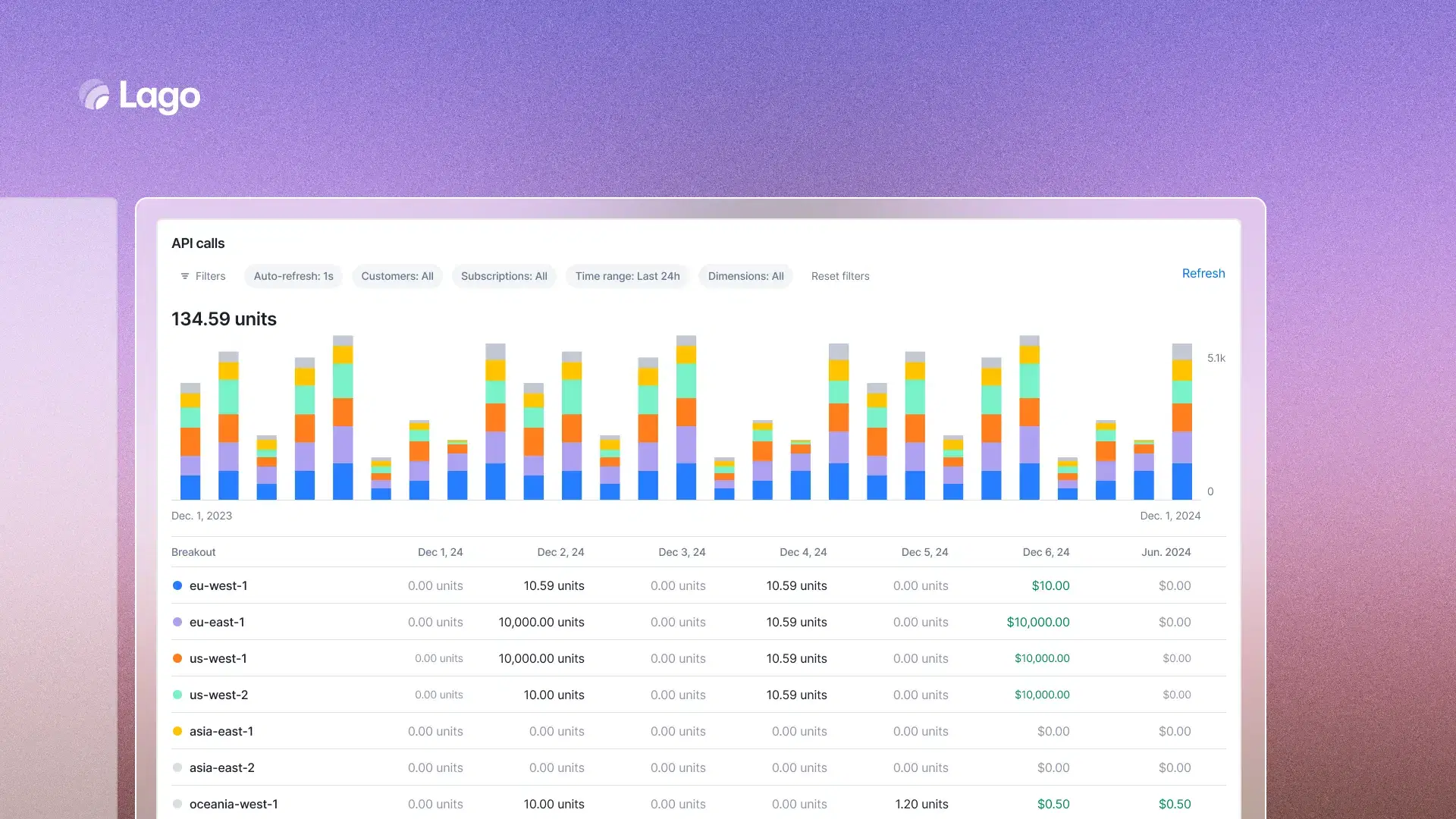
For usage-based or hybrid products, send events with stable customer and subscription identifiers. Test duplicated, delayed, and corrected usage. Then trace one invoice line back to the event, metric, rate, allowance, credit, and tax treatment that produced it. A buyer should be able to understand the charge, and finance should be able to reconcile it. Lago’s usage metering and billing and invoicing are designed for that path; test them with your own contract and event data.
Document what personal data enters billing, who can access it, retention and deletion needs, subprocessors, and where it moves. Hosting in the EU can be relevant, but location alone does not establish GDPR compliance. The European Commission explains that transfers outside the EEA can require a valid transfer mechanism. Review your actual deployment and contracts with privacy counsel. Lago offers cloud and self-hosted deployment; the latter gives your team more infrastructure control and more operating responsibility.
Building gives you control over the exact workflow but makes your team responsible for event reliability, price changes, tax and invoice connections, audit history, corrections, and ongoing country-specific changes. Buying can shorten that work, but only if the platform fits your entities, payment providers, finance exports, and deployment needs. Ask for a live test: ingest usage, apply a contract override and credit, issue an invoice, correct it, and export the resulting records. Include an engineer and a finance owner in the review.
The decision is whether your team can operate that complete path with confidence. Keep the Commission’s invoicing guidance and each relevant national authority’s rules alongside your system requirements, and revisit them when you enter another market.

Anh-Tho Chuong
Anh-Tho Chuong is the co-founder and CEO of Lago, the open-source billing platform. She writes about pricing, business models as code, and using product as a monetization lever.
Share on